وكلاء البرمجة مقابل SaaS: تحول "البناء مقابل الشراء" في عام 2026
٤ سبتمبر ٢٠٢٦
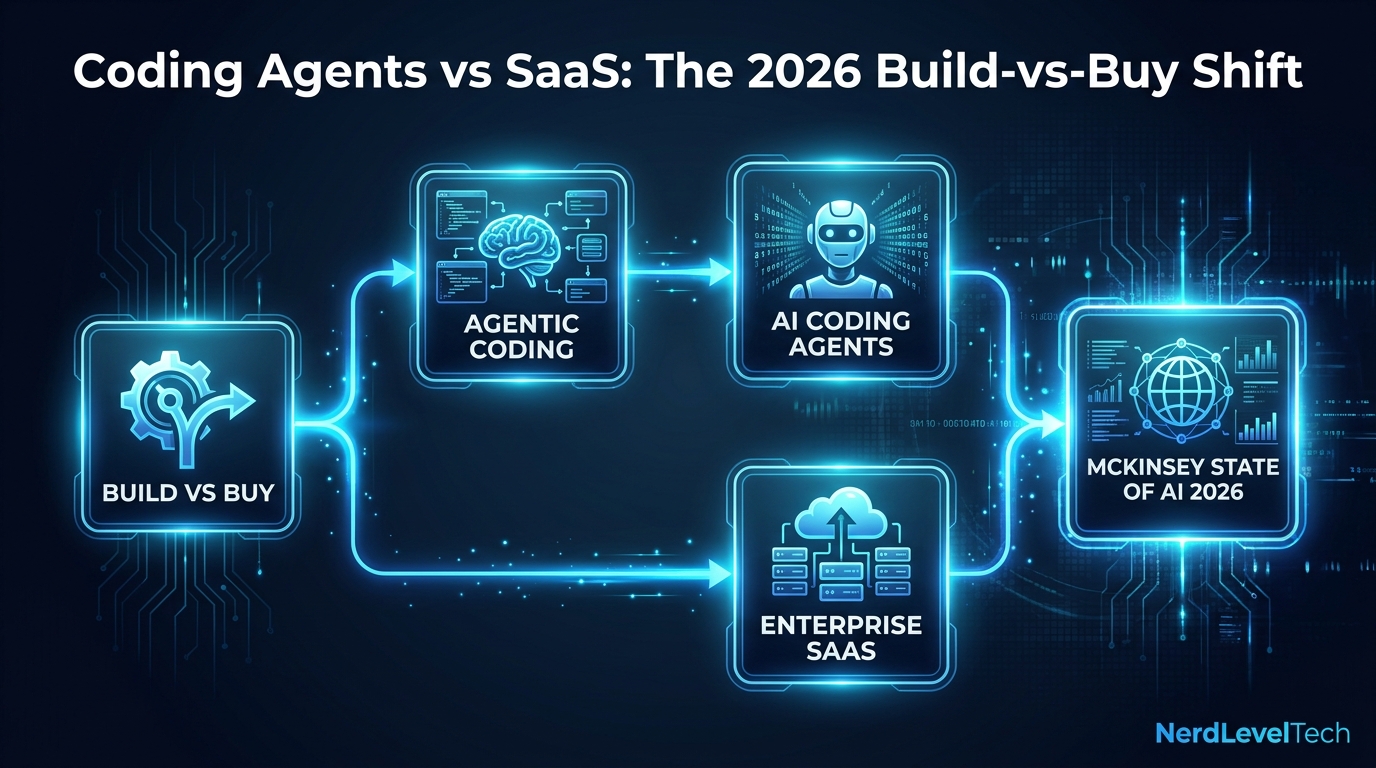
أخبر ما يقرب من ثلث المشاركين — 32% — شركة McKinsey أن مؤسساتهم قررت عدم شراء منتج أو ميزة برمجية واحدة على الأقل لأن بإمكانهم بناؤها داخلياً باستخدام أدوات البرمجة الوكيلية (agentic coding tools).1 هذه عملية شراء تم التخلي عنها، وليست عقداً تم إلغاؤه.
ملخص
نشرت McKinsey مسحها العالمي لحالة الذكاء الاصطناعي لعام 2026 في 25 أغسطس 2026.1 ومن بين نتائجها: قال 32% من المشاركين إن مؤسساتهم تخطت شراء منتج أو ميزة برمجية واحدة على الأقل لأن أدوات البرمجة الوكيلية سمحت لهم ببنائها داخلياً.1
أجري المسح في الفترة من 4 مايو إلى 8 يونيو 2026، وشمل 1,719 مشاركاً من 97 دولة، موزعين حسب حصة كل دولة من الناتج المحلي الإجمالي العالمي.1
هناك رقمان يدعمان ذلك. فقد قفزت المؤسسات الكبيرة التي تقوم بتوسيع نطاق وكلاء الذكاء الاصطناعي في وظيفة واحدة أو أكثر من 27% إلى 40% في عام واحد، بينما ظلت المؤسسات الأصغر ثابتة عند 22%.1 وحوالي اثنان من كل عشر مؤسسات يقومون بتوسيع نطاق وكلاء برمجة البرمجيات عبر المؤسسة — و31% في المؤسسات الأكبر.1
كانت الأسواق قد أعادت تسعير البرمجيات المؤسسية قبل أشهر، وإن كان ذلك في الغالب بناءً على مخاوف مجاورة. ثلاثة من أكثر الأسماء تضرراً في موجة البيع في 3 فبراير 2026 كانوا موردين للمعلومات القانونية والمهنية — Thomson Reuters و RELX و Wolters Kluwer — إلى جانب LSEG. وكان البناء الداخلي بنداً واحداً في قائمة المخاطر لدى أحد المحللين.2
أما القوة الموازنة فهي تكلفة التشغيل. ذكر حوالي 20% من المشاركين أن تكاليف تشغيل الذكاء الاصطناعي، بما في ذلك الـ tokens، حدت من استخدام مؤسساتهم للذكاء الاصطناعي — وأبلغ المتفوقون في مجال الذكاء الاصطناعي لدى McKinsey عن قيود التكلفة على وكلاء برمجة البرمجيات بمعدل ثلاثة أضعاف مقارنة بالبقية.1
ما ستتعلمه
- ما الذي تحسبه نسبة 32% من McKinsey فعلياً، وما الذي لا تحسبه
- إلى أي مدى اتسعت فجوة تبني الوكلاء بين الشركات الكبيرة والصغيرة
- كيف يتصرف الـ 6% من "المتفوقين" بشكل مختلف عن الآخرين
- ما الذي تقيسه نسبة 35% المنافسة من Retool، ولماذا تهم عينتها
- ما الذي أثبته وما لم يثبته بيع البرمجيات في فبراير 2026
- ماذا فعل إجمالي الإنفاق على البرمجيات بينما كان كل هذا يحدث
- أين تؤدي تكاليف الـ tokens وأمن الكود إلى إبطاء جانب البناء
- ما الذي لا تخبرك به أرقام Veracode الأمنية عن الوكلاء تحديداً
- أسئلة تستحق طرحها قبل أن تترك تجديد الاشتراك ينتهي
ما الذي قامت McKinsey بقياسه فعلياً
لا تحدد McKinsey المصطلح في تقريرها المنشور. في الاستخدام الشائع، أدوات البرمجة الوكيلية (agentic coding tools) هي أنظمة ذكاء اصطناعي تخطط وتنفذ أعمال تطوير برمجيات متعددة الخطوات — قراءة مستودع الكود، كتابة الكود عبر ملفات متعددة، تشغيل الاختبارات، والتكرار — بدلاً من مجرد الإكمال التلقائي لسطر واحد في كل مرة.
صياغة McKinsey للنتيجة نفسها دقيقة، وتستحق الاقتباس بدلاً من إعادة الصياغة. أفاد المشاركون أن مؤسساتهم "قررت عدم شراء منتج أو ميزة برمجية واحدة على الأقل لأنهم كانوا قادرين على بناء الوظيفة داخلياً باستخدام أدوات البرمجة الوكيلية".1
اقرأ ذلك بعناية. إنها تحسب قراراً بعدم شراء شيء ما.
لا يتم احتساب العقد الملغى، أو المقعد الذي تم التخلي عنه، أو استبدال المورد الحالي. فالمؤسسة التي رفضت إضافة ملحق تقارير صغير مؤهلة للدخول في الإحصائية، وكذلك المؤسسة التي تراجعت عن تقييم منصة تبلغ تكلفتها سبعة أرقام.
يوزع التقرير المنشور الرقم حسب الصناعة، ولكن ليس حسب حجم الصفقة. وتظهر هذه القرارات في أغلب الأحيان في قطاعي التكنولوجيا والرعاية الصحية، يليهما الخدمات المهنية والطاقة والمواد.1
كما أن المعيار هو "واحد على الأقل"، مما يجعل الحد الأدنى هو حالة واحدة فقط عبر المؤسسة بأكملها، دون تحديد فترة زمنية مرجعية في التقرير المنشور. وهذا حد منخفض بالنسبة لعنوان يبدو وكأنه تحول في السوق.
لا يجعل هذا من النتيجة ضعيفة. فأن تبلغ نسبة ما يقرب من الثلث من عينة عالمية موزونة حسب الناتج المحلي الإجمالي عن تغيير قرار المشتريات بسبب فئة أدوات جديدة هي إشارة حقيقية إلى وجهة ميزانيات تكنولوجيا المعلومات. إنها مجرد إشارة أضيق من قولنا "الشركات تستبدل مجموعة برمجيات SaaS الخاصة بها".
صاغ مايكل تشوي، الزميل الأول في McKinsey والمؤلف المشارك للتقرير، الأمر من منظور الميزانية بدلاً من منظور الاستبدال: "أدوات البرمجة القائمة على الوكلاء (Agentic coding tools) تخلق خياراً أكثر كفاءة لنقل بعض عمليات تطوير البرمجيات داخلياً".3
لاحظ كلمة "بعض".
اتساع فجوة الاعتماد
تعتمد نتيجة "البناء مقابل الشراء" على انقسام أوسع ازداد اتساعاً هذا العام، ولم يضق.
بين المؤسسات التي تزيد إيراداتها السنوية عن مليار دولار، ارتفعت حصة المؤسسات التي توسع نطاق استخدام وكلاء AI في وظيفة واحدة أو أكثر من 27% إلى 40%.1 أما بالنسبة للمؤسسات الأصغر، فتصف McKinsey الاعتماد بأنه ظل "ثابتاً أساساً، عند 22 بالمائة".1
هذا مكسب قدره 13 نقطة على جانب واحد من الخط، وفي المقابل، عام من الركود على الجانب الآخر.
يظهر النمط نفسه في توسيع نطاق AI على مستوى المؤسسة بشكل عام: 54% من مجموعة الشركات التي تتجاوز إيراداتها مليار دولار تبلغ عن توسيع نطاق AI عبر المؤسسة، مقابل نحو ثلث المؤسسات الأصغر.1 وبشكل عام، تبلغ 44% الآن عن توسيع النطاق على مستوى المؤسسة، ارتفاعاً من 38% قبل عام.1
لا تزال وكلاء البرمجة أداة تستخدمها الأقلية. حيث تبلغ مؤسستان من كل عشر مؤسسات عن توسيع نطاق استخدامها عبر المؤسسة، وترتفع هذه النسبة إلى 31% في المؤسسات الأكبر.1 بينما تظل روبوتات الدردشة (Chatbots) متقدمة بفارق كبير بنسبة 47%.1
لذا فإن الصياغة الصادقة هي كالتالي: وكلاء البرمجة هم قدرة أقلية تنمو بسرعة، وتتركز في الشركات الكبيرة، وقد بدأت بالفعل في تغيير بعض قرارات المشتريات. لكنهم لم يصبحوا بعد الطريقة الافتراضية التي تحصل بها المؤسسات على البرمجيات.
وجدت McKinsey أن توسيع نطاق الوكلاء يحدث غالباً في تكنولوجيا المعلومات، وإدارة المعرفة، وهندسة البرمجيات، مع كون التكنولوجيا والإعلام والاتصالات هي الصناعات الأكثر عرضة للإبلاغ عن توسيع نطاق الوكلاء داخل الوظائف.1
الـ 6% الذين يفعلون شيئاً مختلفاً
تُعرف McKinsey "عالي الأداء في AI" بأنهم المستجيبون الذين ينسبون 5% على الأقل من أرباح EBIT إلى استخدامهم لـ AI ويصفون التأثير بأنه "كبير". ويمثلون 6% من إجمالي المستجيبين، وهي نسبة لم تتغير عن عام 2025.1
فيما يتعلق بمسألة "البناء مقابل الشراء"، فإن سلوكهم يختلف بشكل ملموس. حيث أفاد ما يقرب من نصف أصحاب الأداء العالي بتجاوز عملية شراء برنامج واحد على الأقل لأنهم استطاعوا بناءه داخلياً، مقابل أقل من ثلث بقية المشاركين.1
كما أنهم أكثر عرضة بمرتين من الآخرين لتوسيع نطاق وكلاء برمجة البرمجيات (coding agents)، وأكثر عرضة بـ 2.7 مرة لتوسيع نطاق أنظمة الذكاء الاصطناعي الوكيلية (agentic AI) الأخرى.1
ومع ذلك، فإن الاختلاف السلوكي الذي تؤكد عليه McKinsey ليس في الأدوات. فقد أفاد ما يقرب من ثلاثة أرباع أصحاب الأداء العالي بإعادة تصميم سير العمل بشكل جذري بسبب الذكاء الاصطناعي، ارتفاعاً من 55% العام الماضي — مقابل ربع المستجيبين الآخرين.1
من السهل عكس الترتيب السببي هنا في ذهنك: الأدوات أولاً، ثم النتائج. لكن البيانات لا تظهر أن شراء وكلاء البرمجة هو الذي أدى إلى هذه النتيجة. بل تظهر أن فئة واحدة — أصحاب الأداء العالي — قاموا بالأمرين معاً، دون تحديد أيهما حدث أولاً.
رقم Retool الأكبر، وعينته
أفاد استطلاع ثانٍ هذا العام برقم أكبر، وهو أمر يستحق التنويه.
أصدرت Retool تقريراً بعنوان "The Build vs. Buy Shift" في 17 فبراير 2026، ذكرت فيه أن 35% من الفرق قد استبدلت بالفعل أداة SaaS واحدة على الأقل ببناء مخصص. وقال 78% إنهم يتوقعون بناء المزيد من الأدوات الداخلية المخصصة في عام 2026 — وهذا يمثل نية وليس فعلاً.4
هذا ادعاء أقوى من ادعاء McKinsey — استبدال فعلي بدلاً من مجرد التخلي عن عملية شراء.
كما أنه يعتمد على عينة مختلفة: 817 من عملاء ومطوري Retool، تم استطلاعهم في أواخر عام 2025.4 تبيع Retool منصة لبناء البرمجيات الداخلية، لذا فإن المستجيبين فيها لديهم ميل ذاتي نحو البناء.
يجب التعامل مع نسبة 35% كرقم تم رصده بين المطورين الملتزمين، وليس كتقدير للسكان العام. إن صياغة الرئيس التنفيذي لشركة Retool، ديفيد هسو، في الإصدار — "أصبح AppGen للمؤسسات تهديداً لـ SaaS التقليدية" — هي وجهة نظر مورد يطرح نظريته الخاصة.4
تحمل نتيجة "تكنولوجيا الظل" (shadow IT) في التقرير نفس التحفظ بشأن العينة، ولكنها تستحق الذكر على أي حال: قال 60% من المستجيبين إنهم قاموا ببناء برمجيات خارج إشراف قسم تكنولوجيا المعلومات في العام الماضي، وقال 25% إنهم يفعلون ذلك بشكل متكرر.4
إذا استمر هذا الاتجاه خارج نطاق لجنة يغلب عليها المطورون، فإن البناء السريع دون شراء ومراجعة سريعين لن ينتج عنه بنية برمجية أكثر رشاقة. بل سينتج عنه بنية غير مرسومة — تكنولوجيا ظل مرتبطة بمولد أكواد.
وضع استطلاع لاحق لشركة Retool أرقاماً لهذا القلق. أجرت شركة الأبحاث الخارجية Wynter الاستطلاع بين 307 من مديري تكنولوجيا المعلومات (CIOs) والمديرين التقنيين (CTOs) ومديري أمن المعلومات (CISOs) ونُشر في 17 يونيو 2026، ووجد أن 93% قلقون بشأن الأدوات التي تم بناؤها بشكل عشوائي (vibe-coded) والتي تعمل في بيئة الإنتاج.5
كان 38% "قلقين جداً"، واصفين ذلك بأنه خطر تشغيلي رئيسي، بينما وصف 8% فقط حوكمة مؤسساتهم بأنها "قوية".5 لاحظ أن مصطلح "vibe-coded" هو فئة أوسع وأكثر سلبية من البرمجة الوكيلية — فهو يشمل أي نوع من الأكواد الناتجة عن المطالبات (prompts) والتي لم تخضع للمراجعة.
طبق نفس القدر من الشك هنا. فقد تم إجراء الاستطلاع بواسطة طرف ثالث وليس بواسطة Retool، وتم توجيه الأسئلة للمديرين التنفيذيين بدلاً من المطورين، مما يضعف الاعتراض على العينة — رغم أن الإصدار لم يذكر أن اللجنة استبعدت عملاء Retool. كما نشرت Retool هذا الاستطلاع جنباً إلى جنب مع منتج للحوكمة، لذا فإن التوصل إلى نتيجة مفادها أن الشركات تعاني من فجوة في الحوكمة ليس أمراً غير مريح للجهة الراعية.5
ما الذي أثبته وما لم يثبته بيع أسهم فبراير
تحركت الأسواق بناءً على هذه الفرضية قبل أشهر من نشر McKinsey لتقريرها.
في يوم الثلاثاء، 3 فبراير 2026، انخفضت أسهم برمجيات الشركات والتحليلات بشكل حاد. تراجعت RELX بأكثر من 14% وWolters Kluwer بأكثر من 12%؛ وسجلت Thomson Reuters تراجعاً قياسياً بنسبة 16% بسبب المخاوف بشأن قطاعها القانوني الأساسي؛ كما انخفضت مجموعة لندن للبورصة (LSEG) بنسبة تقارب 13%.2
وصلت موجة البيع إلى الأسواق الآسيوية في اليوم التالي، حيث انخفضت أسهم NEC وNomura Research وFujitsu بنسبة تتراوح بين 8% و11%.2
حددت Reuters أحد المحفزات: إطلاق Anthropic لإضافات (plug-ins) لعميل Claude Cowork يوم الجمعة السابق، 30 يناير، مما أتاح أتمتة المهام عبر المجالات القانونية والمبيعات والتسويق وتحليل البيانات.26
وصف توبي أوغ من J.P. Morgan الحالة بوضوح: "نحن الآن في بيئة لا يكون فيها القطاع مذنباً حتى تثبت براءته فحسب، بل يتم الحكم عليه الآن قبل المحاكمة".2
ذكرت Reuters أن أوغ وجد أن شهية المستثمرين للتدخل "منخفضة بشكل عام"، مشيراً إلى مخاطر تشمل المنافسة من الشركات القائمة على AI-native وقيام العملاء ببناء حلولهم الخاصة داخلياً.2
لم يتفق الجميع على ذلك. فقد قلل الرئيس التنفيذي لشركة Nvidia، جينسن هوانغ، من شأن هذه المخاوف في نفس الأسبوع، واصفاً فكرة أن AI سيحل محل البرمجيات والأدوات ذات الصلة بأنها "غير منطقية" قائلاً إن "الوقت سيثبت ذلك".2
لاحظ الشركات التي تضررت بشدة. تصف Reuters شركتي RELX وWolters Kluwer بأنهما مزودان رئيسيان للتحليلات في القطاع القانوني، وقد تراجعت Thomson Reuters بسبب المخاوف بشأن قطاعها القانوني الأساسي.2 وكان المحفز الذي ذكرته Reuters هو عميل يقوم بأتمتة الأعمال القانونية والمبيعات والتسويق وتحليل البيانات.2 أما انخفاض LSEG بنسبة تقارب 13% فقد تم الإبلاغ عنه دون ذكر أي سبب.2
بالنسبة لشركات المعلومات القانونية على الأقل، فإن هذا خوف من قيام العملاء الذكيين (agents) بالعمل الذي تبيعه تلك الشركات — وهو أمر قريب من فرضية "البناء مقابل الشراء" (build-vs-buy)، ولكنه ليس نفس الفرضية. فقد ظهر البناء الداخلي كبند واحد في قائمة مخاطر أحد المحللين.2
سعر السهم هو توقع، وليس نتيجة. تحرك شهر فبراير يخبرك بما توقعه المستثمرون من إيرادات برمجيات الشركات؛ أما استطلاع McKinsey في أغسطس فيخبرك بما أفاد المشترون بأنهم يفعلونه بالفعل. واحد فقط منهما يعد دليلاً على سلوك المشتري.
الإنفاق الإجمالي لا يتراجع أيضاً. تشير توقعات Gartner لشهر يوليو 2026 إلى أن الإنفاق العالمي على البرمجيات سيصل إلى 1.468 تريليون دولار لهذا العام، بزيادة قدرها 15.5% عن 1.271 تريليون دولار في عام 2025 — وهو تسارع مقارنة بنمو عام 2025 الذي بلغ 13.9%، وليس انكماشاً.7
أياً كان تأثير وكلاء البرمجة (coding agents) على المشتريات، فإنه لم يظهر بعد في شكل انخفاض في إجمالي الإنفاق على البرمجيات.
عائقان أمام عملية البناء
جانب البناء يتضمن تكاليف قد لا تظهر في جداول بيانات المشتريات إلا في وقت متأخر.
تكلفة التشغيل. ذكر واحد من كل خمسة من المشاركين في استطلاع McKinsey أن تكاليف تشغيل الذكاء الاصطناعي، بما في ذلك الـ tokens، قد حدت من استخدام مؤسساتهم للذكاء الاصطناعي.1 وبالتفصيل حسب الأداة، أبلغ ما يقرب من واحد من كل عشرة عن وجود قيود لكل من روبوتات الدردشة (chatbots)، والوكلاء (agents)، ووكلاء البرمجة (coding agents).1
التفصيل الأكثر دقة يتعلق بالقادة. فقد أبلغ أصحاب الأداء العالي — وهم المجموعة الأكثر بناءً للأنظمة داخلياً — عن قيود في تكلفة وكلاء البرمجة بمعدل ثلاثة أضعاف مقارنة بالمشاركين الآخرين، بينما لم يظهروا أي قيود غير عادية على أنواع الأدوات الأخرى.1
المؤسسات الأكثر تعمقاً في هذا المجال هي التي تبلغ عن فواتيرها بشكل متكرر. والقراءة البديلة هي أنهم ببساطة يقيسون التكاليف بدقة أكبر، وبالتالي يلاحظون القيود التي قد يستوعبها الآخرون دون تسميتها.
في كلتا الحالتين، يجعل هذا من سقوف الإنفاق على مستوى الجلسة للوكلاء سؤالاً ملحاً في المشتريات وليس مجرد تفضيل هندسي. وهذا هو السبب أيضاً في أن انهيار أسعار نماذج البرمجة ذات الأوزان المفتوحة (open-weight coding-model prices) يمثل أهمية لحالة البناء.
قال ليفين فان دير فيكين، الشريك الأول في McKinsey، وفقاً لما نقلته CIO Dive، إنه لإدارة الإنفاق على تكنولوجيا المعلومات بشكل مثالي، يجب على الشركات أن تكون مدركة ومتأنية في تحديد متى تشتري شيئاً بدلاً من بنائه، وأن تتحمل مسؤولية أكبر تجاه تكنولوجيتها وأجندات التغيير الخاصة بها. وأضاف: "إنهم يتعاملون أيضاً مع تكاليف التشغيل كقيد تصميمي، وليس كفكرة ثانوية، ويقومون بإجراء التغييرات العميقة في سير العمل المطلوبة لتحقيق القيمة".3
الأمن. أصدرت Veracode، التي تبيع اختبارات أمن التطبيقات التي يوصي بها هذا المقال في النهاية، تقرير أمن أكواد GenAI لعام 2026 في 28 يوليو 2026. ومن خلال أربع لقطات اختبارية وأكثر من 100 نموذج تم تتبعها منذ بدء البرنامج، وضعت متوسط معدل اجتياز الأمن عند 56% — "وهو رقم لم يتغير تقريباً منذ تقرير العام الماضي".8 وقد اختبر إصدار 2026 نفسه 11 نموذجاً جديداً.9
قارن ذلك بصحة بناء الجملة (syntax). تولد النماذج الآن أكواداً قابلة للتجميع بمعدل اجتياز syntax تصفه Veracode بأنه شبه عالمي بنسبة 100% تقريباً، بينما تفشل في مهام الأمن بنسبة 44% تقريباً عندما لا يتم تقديم توجيهات أمنية محددة.8
في قائمة المتصدرين لصيف 2026، تصدر GPT-5.5 بنسبة 68%؛ وتجمعت ستة من النماذج الأحد عشر بين 50% و53%، بينما جاء نموذج Qwen3.7-max من Alibaba في المركز الأخير بنسبة 50%.8 وتراوح انتشار اللغات من Python بنسبة 63% وصولاً إلى Java بنسبة 30% — حيث كانت Java الأكثر خطورة بفارق كبير، وتشير Veracode إلى أنها اللغة الوحيدة التي شهدت اتجاهاً تصاعدياً واضحاً خلال العام الماضي.8
لم يجد افتراضان أي دعم في البيانات. حققت النماذج المتخصصة في البرمجة متوسط 51% مقابل 52% للنماذج العامة، وأظهر حجم النموذج ما تسميه Veracode عدم وجود تأثير على أداء الأمان: 53% للنماذج التي تتجاوز 100 مليار بارامتر مقابل 51% للنماذج المتوسطة والصغيرة على حد سواء.8 لم يقدم إصدار Veracode وملخصه العام فترات ثقة، لذا يجب التعامل مع هذه الفروق الضيقة بحذر.
لقد تحسنت أفضل نتيجة مرصودة قليلاً منذ ذلك الحين. في اختبارات متابعة نُشرت في 27 أغسطس 2026 — بعد التقرير، وعلى نموذج أحدث — وضعت Veracode نموذج GPT-5.6 Sol بنسبة 70% أمان إجمالي مقابل 68% لنموذج GPT-5.5. وارتفعت نسبة Python من 70% تحت GPT-5.5 إلى 85% تحت Sol، وارتفعت نسبة cross-site scripting من 50% إلى 60%.10
هذه مقارنات بين نموذجين، وليست متوسطات اللغات عبر النماذج المذكورة أعلاه.
لم تكن هذه المكاسب عامة. كتبت Veracode: "لم تشارك C# و Java في هذا المكسب، وظل JavaScript دون تغيير، وظل log injection (CWE-117) نقطة ضعف واضحة". ولخصت النقطة كالتالي: "النموذج له ملف تعريف أمني، وليس درجة أمان".10
بالنسبة لقرار البناء، فإن هذا يغير السؤال. المسألة ليست أي نموذج يتصدر قائمة المتصدرين، بل ما إذا كانت اللغة وفئات الثغرات التي تعتمد عليها أداتك الداخلية هي التي يجيد هذا النموذج التعامل معها.
هناك تحذير بشأن النطاق يهم أكثر من أي من هذه الأرقام، وتصرح به Veracode بوضوح: "تم إجراء الاختبارات على النماذج الخام وليس على الوكلاء (agents) أو بيئات الإنتاج التي تحتوي على أدوات إضافية، أو حواجز حماية (guardrails)، أو مراجعة بشرية في الحلقة".8
هذا يمثل قيداً حقيقياً عند إسقاط هذه النتائج على حالة الوكلاء. فالوكيل الذي يشغل الاختبارات، ويقرأ الفشل، ويكرر المحاولة ليس هو الشيء الذي يتم قياسه هنا — المنهجية هي مهمة إكمال دالة (function-completion)، 80 منها عبر أربع لغات، تستهدف أربع فئات من الثغرات، دون أي توجيه (prompting) خاص بالأمان.11
سواء كانت حلقات الوكلاء تسد هذه الفجوة أو توسعها، فهذا أمر لا تجيب عنه هذه البيانات.
ما يتبقى بعد هذا التحذير هو عدم التماثل في من يتحمل المخاطر. عند شراء البرنامج، يمتلك المورد برنامج الأمان الخاص به، مهما كانت جودته، مع عقد يوزع بعض العبء. أما عند توليده، فإن كل المسؤولية تظل معك — وكذلك ما يسحبه الوكيل نفسه إلى سياقه (context)، وهي مشكلة ثانية في سلسلة التوريد.
McKinsey مقابل Retool: ماذا يقيس كل رقم
| تقرير McKinsey عن حالة الذكاء الاصطناعي 2026 | تقرير Retool حول "البناء مقابل الشراء" 2026 | |
|---|---|---|
| الرقم الرئيسي | 32% تخطوا عملية شراء1 | 35% استبدلوا أداة SaaS4 |
| ما الذي يتم قياسه | قرار بعدم شراء منتج أو ميزة واحدة على الأقل | استبدال أداة واحدة موجودة على الأقل |
| العينة | 1,719 مستجيباً، من 97 دولة1 | 817 من عملاء ومطوري Retool4 |
| تواريخ الميدان | 4 مايو – 8 يونيو 20261 | أواخر 20254 |
| التوزين | حسب حصة الدولة من الناتج المحلي الإجمالي العالمي1 | غير مذكور في الإصدار |
| مصلحة الجهة الراعية | شركة استشارات؛ تبيع خدمات استشارية في الذكاء الاصطناعي | تبيع منصة البناء |
| نتائج تكنولوجيا الظل (Shadow-IT) | لم يتم الإبلاغ عنها | 60% تم بناؤها خارج إشراف قسم تكنولوجيا المعلومات4 |
ما الذي يجب أن تسأل عنه قبل إلغاء تجديد الاشتراك
خمسة أسئلة تفصل بين قرار بناء مبرر وقرار مكلف:
- هل هذا ميز تنافسية أم مجرد سلعة عامة؟ يرى Chui أن الإنفاق على الأدوات الأفقية المدعومة بالذكاء الاصطناعي مثل روبوتات الدردشة "يتم إدارته بشكل متزايد كتكلفة ضرورية لممارسة الأعمال، على غرار أدوات الإنتاجية المكتبية وأدوات الاتصالات".3 وهذه حجة لشراء الطبقة السلعية. أما النتيجة المترتبة على ذلك — وهي أن حالة البناء تكون أقوى عندما يشفر البرنامج شيئاً خاصاً بك — فهي وجهة نظرنا نحن، وليست وجهة نظره.
- ما هي فاتورة الـ tokens في حالة الاستقرار؟ ليس تكلفة البناء — بل تكلفة التشغيل، بعد أن يقوم العميل البرمجي (agent) بصيانة وتوسيع الشيء. المتميزون في الأداء هم المجموعة التي تبلغ عن هذا القيد في أغلب الأحيان.1
- من سيمتلك هذا بعد ثمانية عشر شهراً؟ الكود المولد لا يزال يحتاج إلى مالك مسؤول عن الاستدعاء، وسياسة تبعيات، ومسار للتحديثات. عادةً ما يغطي عقد المورد جزءاً من ذلك ويوفر لك شخصاً يمكنك تصعيد الأمر إليه في بقية الحالات.
- ما الذي سيحل محل برنامج الأمان الخاص بالمورد؟ معدلات اجتياز النماذج الخام في Veracode — 56% في المتوسط، مع وصول المتصدر في تقريرها إلى 68% واختبار المتابعة في أغسطس لـ GPT-5.6 Sol بنسبة 70% — لا تقيس حلقات العميل البرمجي (agent loops)، وبياناتها لا تعالج ما إذا كانت تلك الحلقات تسد الفجوة.810 وحتى يثبت شيء ما أنها تفعل ذلك، خطط لإجراء تحليل ثابت إلزامي ومراجعة بشرية.
- هل سيعلم قسم تكنولوجيا المعلومات (IT) بوجود هذا؟ أفادت عينة Retool التي يغلب عليها المطورون أن 60% يتم إطلاقها خارج إشراف قسم تكنولوجيا المعلومات.4 هذه عينة منحازة، لكنها تشير إلى المخاطر — اسأل عن رقمك الخاص قبل أن تفترض أنه أقل.
الخلاصة
النسخة الأكثر منطقية لهذه القصة هي أصغر من العناوين الرنانة وأكثر فائدة.
في المؤسسات التي تمثل تقريبًا ثلث المستجيبين لاستطلاع McKinsey، أدت أدوات البرمجة الوكيلية (agentic coding tools) بالفعل إلى تغيير قرار شراء واحد على الأقل — وهو ما تم الإبلاغ عنه بشكل أكبر في قطاعي التكنولوجيا والرعاية الصحية، ومن بين الـ 6% الذين يُصنفون كأصحاب أداء عالٍ، قام معظمهم بالفعل بإعادة تصميم سير عملهم.1 هذا أمر واقع، ولم تكن McKinsey قد سألت عن ذلك من قبل في هذا الاستطلاع.
ما لا تظهره البيانات هو استبدال شامل لبرمجيات المؤسسات على مستوى الـ stack بالكامل. فقد رصدت McKinsey المشتريات التي تم التخلي عنها، ورصدت Retool عمليات الاستبدال داخل قاعدة المطورين الخاصة بها، بينما عكس بيع الأسهم في فبراير انطباعات المستثمرين حول خوف مرتبط ولكن مختلف. لا يقيس أي من هذه المقاييس الثلاثة معدل دوران (churn) برمجيات SaaS في مجتمع معين.
التوتر المثير للاهتمام يكمن لدى القادة؛ فالمؤسسات نفسها التي تبني أكبر قدر من الأدوات داخليًا هي الأكثر إبلاغًا عن ضغوط التكلفة على الأدوات التي تقوم بعملية البناء.1 وأيًا كان شكل الخط الفاصل بين "البناء مقابل الشراء" في عام 2027، فسيتم رسمه من قبل من يتمكن من السيطرة على تكاليف التشغيل — وليس من يطرح أول بديل داخلي.
Footnotes
-
دان تينكوف، ليفين فان دير فيكين، مايكل تشوي، وتارا بالاكريشنان، "حالة الذكاء الاصطناعي في 2026: في الطريق إلى عائد الاستثمار،" McKinsey & Company، 25 أغسطس 2026. ↩ ↩2 ↩3 ↩4 ↩5 ↩6 ↩7 ↩8 ↩9 ↩10 ↩11 ↩12 ↩13 ↩14 ↩15 ↩16 ↩17 ↩18 ↩19 ↩20 ↩21 ↩22 ↩23 ↩24 ↩25 ↩26 ↩27 ↩28 ↩29 ↩30 ↩31 ↩32 ↩33 ↩34 ↩35
دانيلو ماسوني، "أسهم البرمجيات العالمية تتأثر بصيحة استيقاظ Anthropic بشأن اضطرابات الذكاء الاصطناعي،" رويترز، 4 فبراير 2026. ↩ ↩2 ↩3 ↩4 ↩5 ↩6 ↩7 ↩8 ↩9 ↩10 ↩11 ↩12 ↩13
بيج جروس، "المؤسسات تراهن على الوكلاء لبناء برمجيات داخلية وتعزيز الإنتاجية،" CIO Dive، 27 أغسطس 2026. ↩ ↩2 ↩3
"تقرير Retool لعام 2026 حول البناء مقابل الشراء يكشف أن 35% من الشركات استبدلت بالفعل SaaS ببرمجيات مخصصة،" Business Wire، 17 فبراير 2026. ↩ ↩2 ↩3 ↩4 ↩5 ↩6 ↩7 ↩8 ↩9 ↩10
"بينما يتصدر Vibe Coding قائمة مخاوف الإدارة العليا، تكشف Retool عن أول منصة لتوسيع حوكمة الشركات لتشمل جميع التطبيقات المبرمجة بالذكاء الاصطناعي،" Business Wire، 17 يونيو 2026. استطلاع أجراه Wynter؛ ملخص الإصدار يقرب العينة إلى 300 بينما يذكر متن النص 307. ↩ ↩2 ↩3
لوكاس روبيك، "Anthropic توفر إضافات وكيلية لـ Cowork،" TechCrunch، 30 يناير 2026. ↩
"Gartner تتوقع نمو الإنفاق العالمي على تكنولوجيا المعلومات بنسبة 14.2% في عام 2026، ليصل إلى 6.37 تريليون دولار،" Gartner، 27 يوليو 2026. أرقام قطاع البرمجيات من الجدول 1. ↩
"نماذج LLMs تصبح أكثر ذكاءً، ولكن ليست أكثر أماناً: تقرير Veracode لعام 2026 حول أمن الأكواد المولدة بالذكاء الاصطناعي التوليدي يجد أن أمن الأكواد المولدة بالذكاء الاصطناعي قد توقف عند معدل نجاح 56%،" Business Wire، 28 يوليو 2026. ↩ ↩2 ↩3 ↩4 ↩5 ↩6 ↩7 ↩8 ↩9
"تقرير أمن الأكواد المولدة بالذكاء الاصطناعي التوليدي لعام 2026،" Veracode، 28 يوليو 2026. الأرقام المذكورة هنا مأخوذة من صفحة الملخص العام للتقرير. ↩
أبحاث Veracode، "GPT-5.6 Sol يوضح لماذا لا يعني النموذج الأفضل بالضرورة نموذجاً أكثر أماناً بشكل مطلق،" Veracode، 27 أغسطس 2026. ↩ ↩2 ↩3 ↩4
فيليكس برومباكر، "تحديث أمن الأكواد المولدة بالذكاء الاصطناعي التوليدي لربيع 2026: رغم الادعاءات، لا تزال نماذج الذكاء الاصطناعي تفشل في اختبارات الأمان،" Veracode، 24 مارس 2026. ↩